
This is part of our series on upcycling.
Brewing and winemaking are among humanity's oldest fermentation practices, alongside making bread. Indeed, consumption of alcohol may even predate Homo sapiens, with evidence suggesting that other primates have long consumed naturally fermented alcoholic fruits.¹
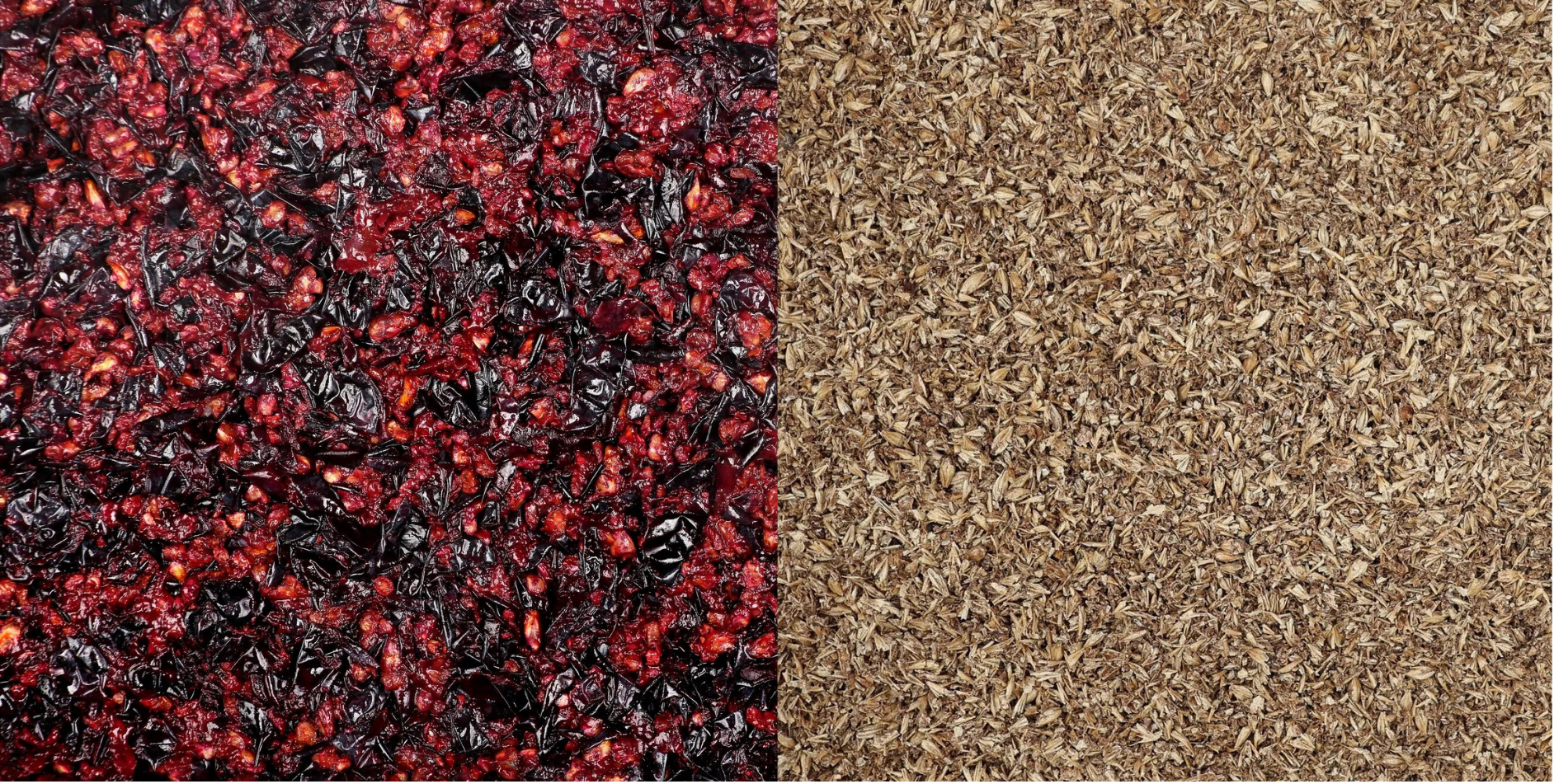
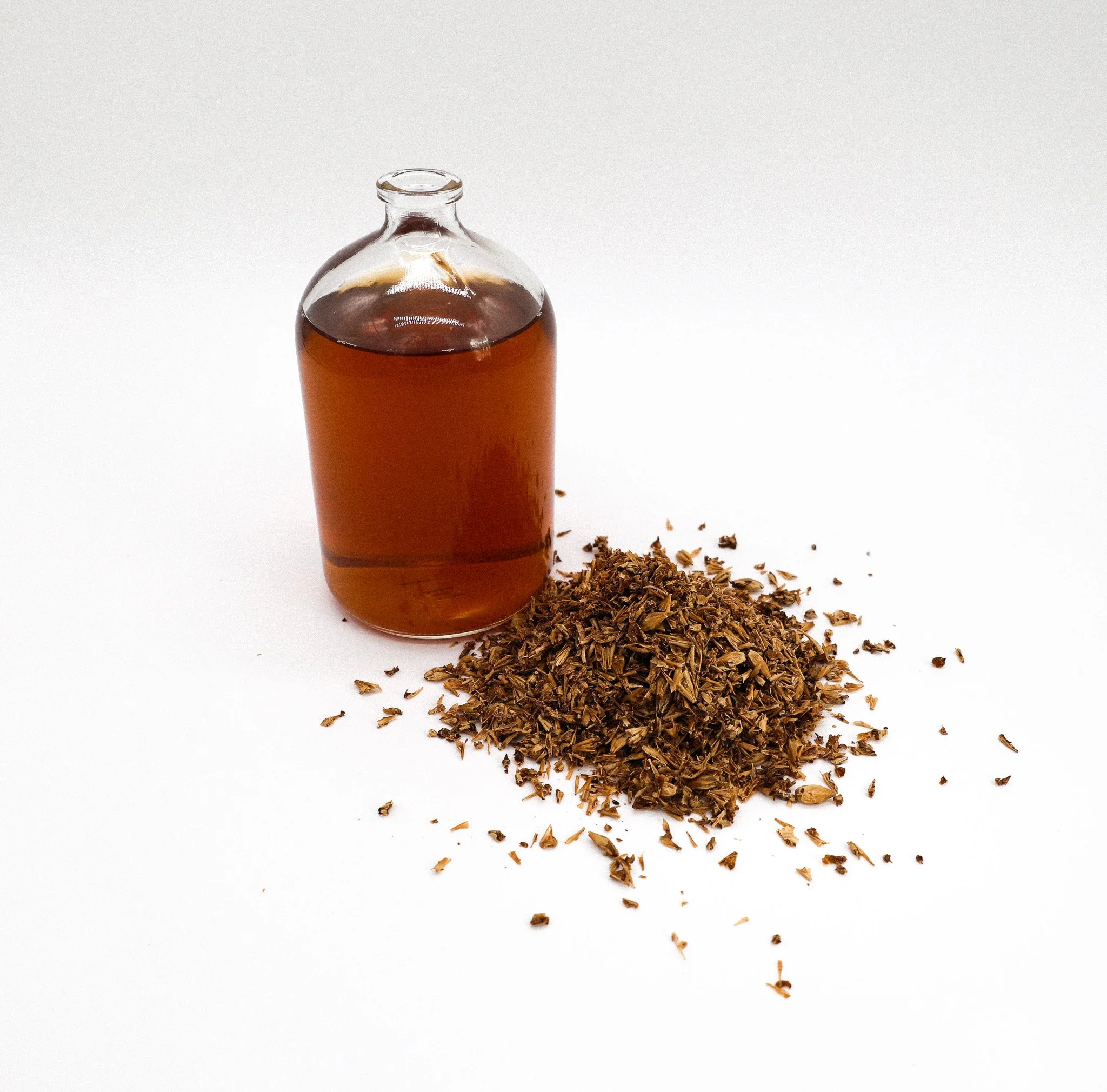
Making alcoholic beverages generates substantial volumes of by-products. Brewer’s spent grain (BSG) is the primary by-product of brewing beer, and is perhaps the quintessential by-product in the Global North. Due to its high protein and fibre content, BSG has great upcycling potential², but no one has quite cracked it at scale yet. For every litre of beer brewed, around 200g of wet BSG (or 40g dry) is produced, amounting to around 36 million tonnes per year globally.³ This is a huge untapped resource, yet several barriers have hindered BSG’s latent potential. Its highly fibrous nature poses textural challenges that must be worked with when using it as an ingredient.⁴ It also has a short shelf-life because it is warm, wet and still rich in fermentable sugars, providing the perfect environment for microbial life to flourish. As a result, if not immediately stabilised through processing or storage, it quickly begins to ferment once removed from the fermentation vessel and spoils rapidly. Most breweries don’t have the infrastructure or the space to quickly and safely cool, store, dry and/or otherwise process BSG, and it is usually classified as waste once it leaves the brewery premises, unless strict handling procedures are adhered to.
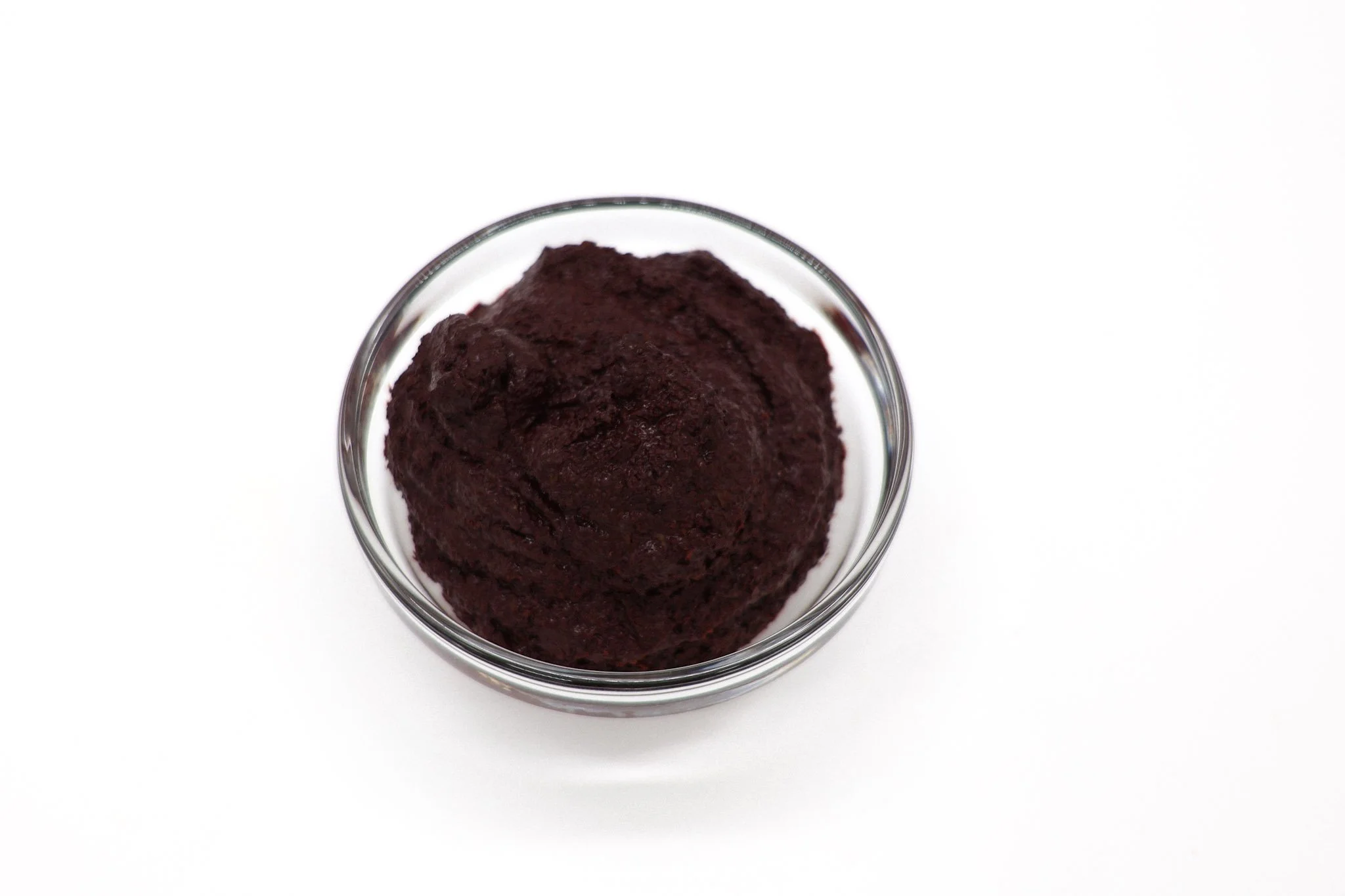
In winemaking, the primary by-product is grape pomace—the seeds, skin and flesh leftover after pressing. For every tonne of grapes processed to make wine, about 150kg of pomace is left over, amounting to around 13 million tonnes globally per year.⁵ Pomace is rich in bioactive compounds, though its exact composition varies depending on the type of wine being made and the stage at which the solids are removed.⁶ Pomace is sometimes used to make grapeseed oil and spirits like grappa, but it may also have other delicious uses and faces many of the same logistical challenges as BSG.
Another major by-product common across many alcoholic beverages is lees, the sediment left after fermentation that consists primarily of dead yeast cells and other particles from the liquid substrate that settle to the bottom of the tank or barrel during and after fermentation, left behind once the yeasts have finished their work converting sugars into alcohol and CO₂.⁷ Other potential high-value by-products include hot trub and waste beer and wine.
Today, many of these by-products are often used as animal feed.⁸ This makes sense in some contexts, but when deciding how we use food by-products, we must keep in mind the futures we want to see flourish. For example, a huge commercial brewer sending its BSG to a factory farm as feed might prevent waste from going to landfill, but in solving one problem, we might be entrenching other undesirable features of the current food system, like industrial animal agriculture.⁹ Upcycling beer and wine by-products into foods that can directly feed people is another, more direct option for making use of this untapped potential.
Here we present some of our culinary research into ways we can better utilise all these by-products.


Contributions & acknowledgements
Eliot wrote the article, with contributions and editorial feedback from Josh.
Eliot photographed the BSG in our food lab.
Endnotes
[1] Rob Dunn and Monica Sanchez (2021) Delicious: The Evolution of Flavor and How It Made Us Human, Princeton University Press: Princeton, New Jersey, USA.
[2] Kieran Lynch, Eric Steffen and Elke Arendt (2016), ‘Brewers' Spent Grain: a Review with an Emphasis on Food and Health’, Journal of the Institute of Brewing; Simon Bolwig, Michael Spjelkavik Mark, Maaike Karlijn Happel and Andreas Brekke, A. (2019). ‘Beyond animal feed?: The valorisation of brewers’ spent grain’, in: From Waste to Value: Valorisation Pathways for Organic Waste Streams in Circular Bioeconomies, Routledge, Abingdon, UK.; Pradeep Puligundla and Chulkyoon Mok (2021), ‘Recent Advances in Biotechnological Valorization of Brewers' Spent Grain’, Food Science and Biotechnology; Andela Zeko-Pivač, Mairn Tišma, Polona Žnidaršič-Plazl, Biljana Kulisic, George Sakellaris, Jian Hao and Mirela Planinić (2022), ‘The Potential of Brewer’s Spent Grain in the Circular Bioeconomy: State of the Art and Future Perspectives’, Frontiers in Bioengineeering and Biotechnology; and many others...
[3] Mahesh Gupta, Nissreen Abu-Ghannam and Eimear Gallaghar (2010), ‘Barley for Brewing: Characteristic Changes during Malting, Brewing and Applications of its By-Products’, Comprehensive Reviews in Food Science and Food Safety; Maria Victoria Santos, Natalia Ranalli, Juliana Orjuela-Palacio and Noemi Zaritzky (2024), ‘Brewers spent grain drying: Drying kinetics, moisture sorption isotherms, bioactive compounds stability and Bacillus cereus lethality during thermal treatment’, Journal of Food Engineering. The exact composition and yield of BSG varies between different styles of beers.
[4] Andela Zeko-Pivač, Mairn Tišma, Polona Žnidaršič-Plazl, Biljana Kulisic, George Sakellaris, Jian Hao and Mirela Planinić (2022) ‘The Potential of Brewer’s Spent Grain in the Circular Bioeconomy: State of the Art and Future Perspectives’, Frontiers in Bioengineeering and Biotechnology.
[5] Margarida Oliviera and Elizabeth Duarte (2016), ‘Integrated approach to winery waste: waste generation and data consolidation’, Frontiers of Environmental Science and Engineering.; María Gómez-Brandón, Marta Lores, Heribert Insam and Jorge Domínguez (2019) ‘Strategies for recycling and valorization of grape marc’, Critical Review Biotechnology.
[6] Alison Crowe, ‘The pomace predicament’, Wine Maker Magazine.
[7] Ancuța Chetrariu, Adriana Dabija, Larisa Caisin,Vitalii Agapii and Ionuț Avrămia (2025), ‘Sustainable Valorization of Wine Lees: From Waste to Value-Added Products’, Applied Sciences.
[8] Simon Bolwig, Michael Spjelkavik Mark, Maaike Karlijn Happel and Andreas Brekke (2019), ‘Beyond animal feed?: The valorisation of brewers’ spent grain’, in: From Waste to Value: Valorisation Pathways for Organic Waste Streams in Circular Bioeconomies, Routledge, Abingdon, UK.
[9] A craft brewery sending its BSG to an agroecological farm as feed for its animals might be a different story.