
This is part of our series on upcycling beer & wine by-products.
Table of Contents
i. Introduction
Lees are the sediment left after fermentation of wine, beer, sake and other yeast-fermented alcoholic beverages. They consist primarily of dead yeast cells and other particles from the liquid substrate that settle to the bottom after fermentation, left behind once the yeasts have finished their work converting sugars into alcohol and CO2.¹
This by-product is produced twice during wine-making: first, after primary fermentation, when the coarser solids are filtered out (gross lees) and then also the finer particles that settle during maturation or ageing (fine lees).² On average, lees accounts for about 10% of the total mass in wine production, or almost a small wine glass worth of lees for every litre of wine produced: nearly 3 million tonnes globally per year.³
Though perhaps not a familiar ingredient to all readers, lees from various types of alcohol production have long histories of culinary use. In regional Chinese and Japanese cuisines, they are used as a seasoning, soup base, an ingredient in amazake, a tenderising marinade and as a braising liquid for tofu or meats.⁴ In Europe, there are also traditions of using lees to make breads and spirits.⁵
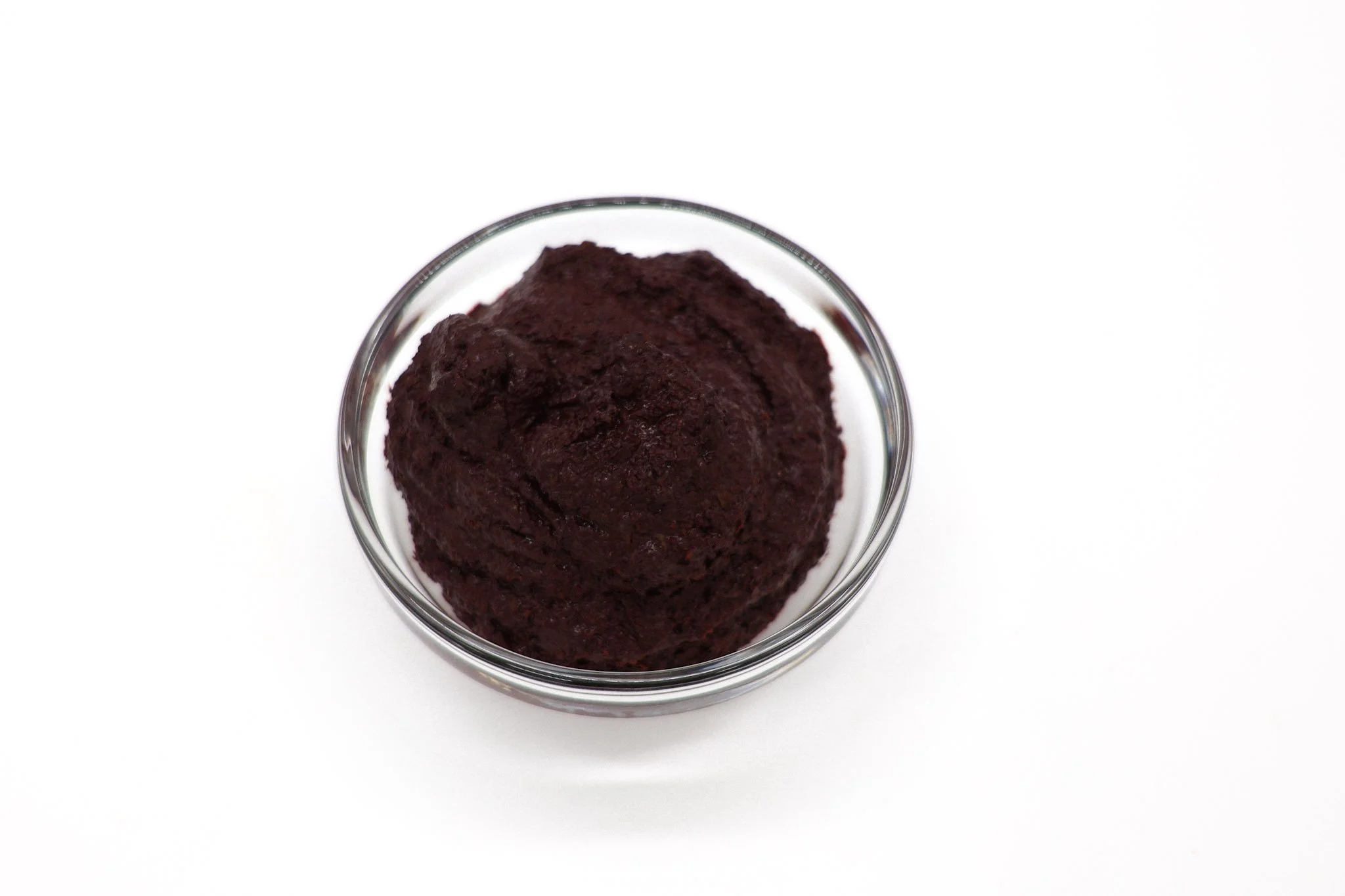
Here, we use it to make a product inspired by koshō, a spicy, citrus-based Japanese condiment. Building on the base of citrus and chilli, we add wine lees for a boost of umami and an added layer of complex fruitiness.
ii. Recipe
Ingredients
200g orange zest, microplaned and finely pounded with a pestle and mortar
150g red wine lees
20g salt
12g ancho chilli, dried and ground
Method
Mix everything together in a sterilised bowl.
Seal the mixture in a vacuum bag and age it in the fridge for at least one week.
iii. Adaptations
Although we use red wine yeast lees in this recipe, this same technique could be applied to lees from any wine or barrel-fermented sour beer. We don’t recommend using kettle-soured beer lees or lees from regular hopped beers in this recipe, as they can be very bitter. That's not to say that they can't be used to make koshō or other foods in general, but it would require more experimentation to find the right balance and acceptable flavour.
You could substitute any citrus fruit or chilli in your koshō, if you ensure the flavours and heat level match the other ingredients you use. We can offer that grapefruit zest, habanero and red wine lees is not a good combo!
Contributions & acknowledgements
Kim performed the original culinary R&D starting in 2020, before developing it further with us, which he documented through notes and photography. Eliot wrote the article using these notes and following further discussion with Kim, with contributions and editorial feedback from Josh. Nurdin and Eliot photographed the final product in our food lab.
Thanks to our friends at @weirdloose_overdrive for the red wine lees.
This recipe has roots in Kim’s previous work as Head of R&D at the former Amass Restaurant in Copenhagen. Thank you Amass for facilitating such trailblazing work in culinary upcycling and holistic sustainability!
Related posts

Endnotes
[1] Ancuța Chetrariu, Adriana Dabija, Larisa Caisin,Vitalii Agapii and Ionuț Avrămia (2025), ‘Sustainable Valorization of Wine Lees: From Waste to Value-Added Products’, Applied Sciences.
[2] Matteo Bordiga (ed) (2016), Valorisation of wine making by-products, Routledge.
[3] Ancuța Chetrariu, Adriana Dabija, Larisa Caisin,Vitalii Agapii and Ionuț Avrămia (2025), ‘Sustainable Valorization of Wine Lees: From Waste to Value-Added Products’, Applied Sciences.
[4] Though we’ve included them here, some of these lees-based products contain other ingredients too e.g. red rice wine lees, Hong Zao or 红糟, popular in regional Chinese cuisine, is a mixture of rice and yeast lees. It might be possible to make koshō-like product from yeast lees mixed with other ingredients, though we haven’t tried it and it might require further tinkering to get right. For more on traditional use of lees see: Sake Lees (Sake Kasu), Just One Cookbook.
[5] Matteo Bordiga (ed) (2016), Valorisation of wine making by-products, Routledge.