Reclaiming innovation
This article was originally published in the Food & Foodways journal.
Table of Contents

‘Rule 2: Don’t eat anything your great grandmother wouldn’t recognise as food’
‘Rule 7: Avoid food products containing ingredients that a third-grader cannot pronounce’
‘Rule 42: Regard non-traditional foods with scepticism’
—Michael Pollan: Food Rules. An Eaters Manual¹
i. A scepticism toward innovation
In food studies and related fields, it is well-established that food cultures are dynamic and have always been innovating to adapt to new circumstances, persist, and thrive.² Scholars recognise that the alternative is ahistorical. Indeed much of what many think of as traditional—food and otherwise—is often more recently invented than is typically supposed.³ Today it’s difficult to imagine, for example, Italian cuisine without tomatoes, Northern European cuisine without potatoes, or various Asian cuisines without chillies. Yet before the sixteenth century, these foods were unheard of in these food cultures, until, circulating from the Americas, they were assimilated and made traditional, indispensable favourites.⁴ In this dynamic view of food cultures, past innovators are celebrated for their resourcefulness, and their innovations for having helped bring food cultures to where they are now.
Despite this broad acceptance of food cultures as dynamic, explicit critical engagement with innovation as a term and analytic remains surprisingly limited in food studies. Here, we understand innovation as a process of ‘making new’, following the work of the late sociologist Benoît Godin, a leading authority on the study of innovation.⁵ While some food culture scholars do study changing practices and may even frame these as innovations, their focus often tends to be on the resurrection of forgotten traditions (i.e. accretions of past innovations).⁶ Though valuable, this process might be better described as ‘retroinnovation’.⁷ Others do critically engage with contemporary innovation, but do so incidentally, or appear hesitant to explicitly frame it as such.⁸ There are understandable reasons for this reticence, including innovation’s common association with corporate capture, resource and profit extraction, and the homogenization and industrialisation of taste; hierarchical divides between the natural and social/human sciences; pressures related to funding, intellectual property and commercialisation; and a concern with moral purity, among others. We recognise and at times feel these same pressures ourselves.
Other scholars do not shy away from the term, nor do they categorically reject it⁹, though we sense there is much more space to critically engage with innovation as an analytic. While we know of a handful of exceptions that do explicitly engage with innovation analytically, for example, in relation to artisan cheese¹⁰ or how Indigenous knowledge can inform culinary innovation¹¹, we remain curious about why this dynamic understanding of food cultures has not led to more critical research on how exactly they evolve through innovation.¹²
Distrust or outright rejection of innovation is even more categorical in popular food writing, as above, where Michael Pollan implores us to ‘regard nontraditional foods with scepticism.’ So too among alternative food movements, like Slow Food, which—its groundbreaking work to preserve agrobiodiversity, food culture and traditional foodways notwithstanding—can sometimes have a tendency to consider traditional foods as static and unchanging, romanticising them for their authenticity and purity. While we as scholars otherwise share many of these actors’ values, this tendency, we fear, might implicitly accept that the relation between tradition and innovation is a binary, zero-sum game—unless an alternative can be articulated. This is what we aim to do in this article, by considering what is lost or precluded for flourishing, flavorful, ecological food futures by being so generally sceptical of, if not categorically rejecting innovation, and developing a different conception of innovation—amodern innovation—that, we believe, can help move toward them.
ii. Amodern innovation
We propose that one of the primary reasons for the categorical skepticism of innovation we have evidenced and sensed, explicitly in much popular discourse and implicitly in some scholarly ones, is because it is typically only understood in its dominant, ideologically modernist form: advancing universal, technocratic ‘solutions’, consolidating power into a handful of corporations, and aiming to decouple people from land, leave tradition in the past, and homogenize cultural difference—innovation as rupture.¹³ Alternative food movements like Slow Food, meanwhile, reacting to this agenda, are often anti-modernist, favouring the preservation of traditional diversity and food culture as a resistance to modernism. From this perspective, they then see innovation as an existential threat to tradition, which they therefore categorically reject.¹⁴ So it is understandable that tradition and innovation are then often framed as zero-sum, even when both are framed as necessary, in food-cultural movements and scholarship, as in wider society.
Yet this dichotomy is false. Innovation is much more than this dominant form.¹⁵ We understand tradition and innovation as co-constituting forces, and propose that the latter can, if performed discerningly, enrich food culture.¹⁶ This approach to innovation is more about gradual, careful tinkering than pursuing the dream of total rupture with the past, a ‘making new’ that is part of how cultures adapt and change and is motivated by reasons other than profit and control.¹⁷ It is not for or against modernism, but is instead agnostic to it. Nor is it even a response to modernism, since it is, following Latour¹⁸, ‘what happens, and ha[s] been happening the whole time, before, during, beyond, and in spite of modernism’.¹⁹ As such, we call this ‘amodern’ innovation, after sociologist Bruno Latour’s assertion that ‘we have never been modern’.²⁰ The richness of food cultures, then, we can understand as the selective accretion of these innovations into traditions.²¹ How do foods, like the tomatoes, potatoes, and chillies above, go from being unknown to being fiercely loved? By being tinkered with, experimented with, as taste by taste, their place in a food culture is gradually discovered, negotiated, cemented, and renewed. In short, through a process of amodern innovation.
For but one example: the myriad forms of traditional dairy cheese, rightly celebrated for their diversity and gastronomic heritage, only exist in the first place because people have always innovated to adapt to their environments to nourish themselves and their communities. With roots in millennia-old practices of dairying across Eurasia and North Africa that have since spread around the world²², the beloved cheeses of today are the products of thousands of years of tinkering innovations that have accreted into traditions. If our ancestors had refused to innovate, as cheesemaking spread to new locales across different bioregions and was adapted to new challenges, ingredients, techniques and preferences, then cheese, if it continued to exist at all, would be impoverished compared to what it is today.
Such tinkering continues; indeed, it is inevitable. Novel versions of miso, the fermented Japanese condiment, are one of many products we make and research in our R&D kitchen and lab, where we seek to make and study flavorful, old-new foods to support green transitions. They are another example of taking traditional techniques and ‘translating’ them to use regionally and culturally appropriate ingredients while honouring their origins.²³ In this case, traditional Japanese techniques have been adapted to use Danish ingredients like yellow peas, fava beans and rye bread, often made with barley kōji, to provide umami and other flavours not previously found in Danish cuisine.²⁴ These novel misos are just the latest iterations in a long line of tinkering that originated in China over 2,500 years ago with jiangs—mixed fermented condiments of meats, fish, vegetables and grains. These jiangs then spread across Asia, including being brought to Japan, where they evolved into different umami-rich, salty condiments like miso, tamari, and shōyu (soy sauce), before much more recently being embraced and evolving further elsewhere in the world.²⁵ This story is just one illustration of why embracing traditions (i.e. past innovations) but rejecting contemporary innovations that might advance them in fruitful directions makes little sense, and is indeed ahistorical.
In our R&D kitchen, we seek to join this millennia-old flow of tinkering innovation, developing miso and shōyu-like products as novel sources of umami and other flavours, by upcycling food by-products that aren’t typically considered edible—like brewer’s spent grain, spent coffee grounds and cereal bran—to make delicious new-old foods for people (Figure 1). These products point to how much untapped potential exists in our food system, waiting to be unlocked through fermentation, innovative use of enzymes, and other forms of discerningly engaged old-new technology.

Figure 1. Wheat bran amino sauce.

Figure 2. Endive root tonic.
Another important feature of amodern innovation is its serendipity. Our R&D chef, Kim Wejendorp, was exploring coffee substitutes by upcycling Belgian endive roots, building on another existing tradition of chicory coffee. By chance, he discovered that the bitter roots, when wild-fermented, developed a refreshing citrussiness, so he pivoted toward developing a tonic water-style beverage instead (Figure 2).²⁶ There may be countless other examples of delicious flavours that would remain undiscovered if we did not continue to innovate amodernly, as generations before us have, and in doing so keep ourselves open to being surprised.
This kind of innovation is ancient, ubiquitous, and fundamentally different from that of Big Tech. The difference lies in its governing ideology: modernism, or amodernism.
iii. Rejecting innovation limits desirable futures
We are concerned that the categorical rejection of innovation—even if understandable and well intentioned—is ultimately counterproductive and self-limiting, potentially depriving us diversity inclined scholars and eaters of countless other new flavours and foods that could enrich food cultures and support sustainability, like those described above. By writing off all innovation—both its practice and its study in such terms—because its currently dominant form is associated with capital and power, anti-modernism refuses the use of a potentially powerful tool because it is seen as morally impure. This refusal does not serve alternative food movements or food culture research, especially as even many ‘traditional’ food industries have also been to some extent captured by capitalism. Capitalism is, for now, inescapable, and we are all shaped by it whether we like it or not; purity is not possible.²⁷ At the same time, amodern innovation has existed long before capitalism, which would suggest that it can also exist without it, and may even help resist it, if practised in a discerning, community-oriented, culture-enriching way. By rejecting innovation categorically, we might be denying future food cultures something as potentially impactful and delicious as dairy cheese, or all the rich traditions that sprang from the crops exchanged among the Americas, Africa, and Eurasia. What do those of us who wish for more flourishing food futures lose, we wonder, when we relinquish innovation to modernist, capitalist industry?
A blanket rejection of all forms of innovation limits the potential for desirable futures that many eaters and food communities otherwise claim to want. This is the case for what food innovation is most often understood to be, namely food product R&D, but can be seen throughout the food system—not only in ‘downstream’ areas like processing, preparation and consumption, but also in primary production.²⁸ An illustrative example here is agroecology: an approach to agriculture based on ecological science that offers a transformative socio-political vision for the food system rooted in equity, justice and food sovereignty, with roots in traditional and Indigenous agricultural practices.²⁹ Like others, we believe that agroecology is a critical component of a more flourishing future food system. Yet it is often wrongly conflated with anti-modernism, as if it were simply about clinging to an idealised past that might never have existed while eschewing potentially valuable knowledges or technologies that can help advance it toward the futures its practitioners desire. Rather, the mode of agroecology that we and many of its advocates find most promising is an amodernist one, recognising that agroecological practices, knowledge and heritage crop varieties are all the product of past innovations, and must continue to be innovated to remain usable in an ever-changing present and future-in-formation.
For example, rather than fetishising heritage or heirloom varieties of crops and trying to preserve them in some unchanging state (anti-modernism), agroecologists need to breed them ever further so they continually adapt to a changing climate to stay viable (amodernism). Several groups like Row 7 Seeds, the Culinary Breeding Network, Wakelyns, the Utopian Seed Project, the Gaia Foundation’s Seed Sovereignty Programme and others are already doing so, further developing crop varieties, including landraces and population varieties.
Such varieties are better suited to agroecology, better adapted to specific bioregions, more resilient and adaptable to changing environmental conditions, and possess qualities better suited for their intended use, for example, prioritising flavour and nutrient density over uniformity in size and shape.³⁰ It is through precisely these amodern practices that our ancestors made all the diverse seeds we all now inherit. Keeping traditions alive is about keeping them living³¹, allowing them to continue to respond and adapt to their environment as it too changes. And since agency, autonomy and sovereignty are core tenets of agroecology³², it should be up to food cultures and communities to determine for themselves which foods they eat and how they produce them³³—including which traditions to innovate to keep them living— rather than having a rigid preservation mindset imposed on them or being judged because others don’t like them changing.³⁴
iv. Reclaiming innovation can cultivate help desirable futures
We now come to the central question of this Special Issue—’whether or not to change eating habits’. One way amodern innovation can contribute to answering this question is by providing tools, experiments, and ideas that support eaters and communities to determine for themselves how their food cultures should continue to evolve and adapt, driven by their everyday choices and daily eating habits. For us, ‘good’ (i.e. amodern) food innovation is innovation that builds on tradition to offer eaters more diverse, flavorful, ecological, and culturally appropriate food choices. Earlier, we gave a glimpse of some innovations that could help do so. Another, potentially more radical example is plant cheese.
Most plant cheese available to buy today fits squarely in the modernist innovation paradigm: ultra-processed, highly engineered foods, with homogenised, mediocre flavour, texture and other sensory properties, which proponents argue should replace all dairy cheese in the name of (reductionist) sustainability. An anti-modernist perspective thus typically rejects all plant cheese as an unnecessary and even threatening techno-capitalist innovation that disregards food culture and tradition, instead focussing on the preservation of traditional varieties of dairy cheese.³⁵ Here we are again—back in the same binary, zero-sum, either–or proposition.
Yet this is not the only form that plant cheese could take, or the only possible terms of the debate. Traditional dairy cheesemaking techniques and traditional techniques for fermenting plant substrates (e.g. for tofu) could be—and indeed are being—translated to cheesemaking with whole and upcycled plant ingredients.³⁶ Coupled with the discerning use of technology to develop enzymatic coagulants like rennet best-suited to plant substrates, this approach points to an alternative future for plant cheese that is eminently amodern (Figure 3). We imagine a future in which countless bioregionally diverse varieties of plant cheese, made from different agroecologically-grown plant ingredients, might enrich food culture with new traditions (Figure 4).
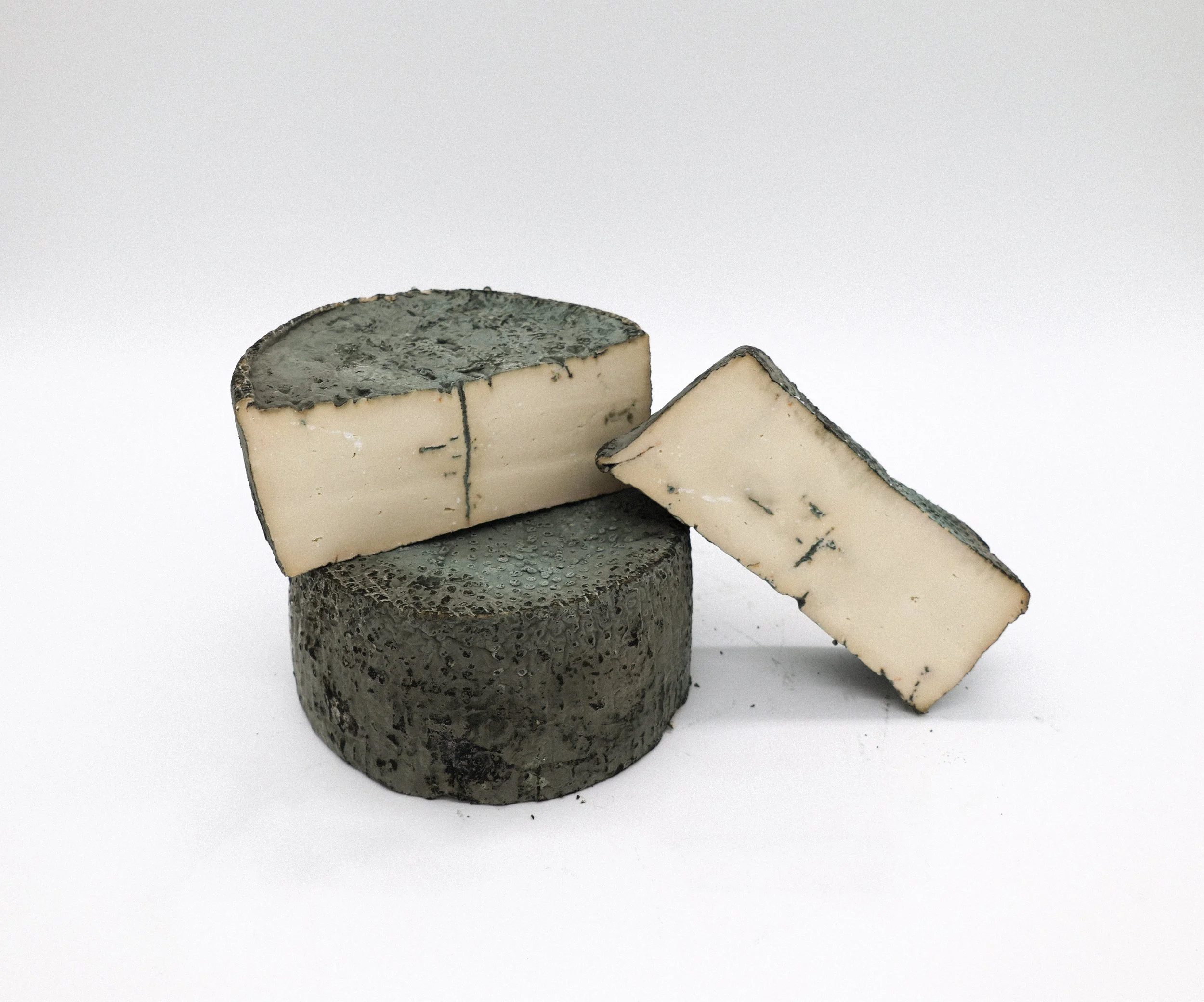
Figure 3. An early legume-based plant cheese prototype, modelled on artisan cheesemaking practices, made in our R&D lab.

Figure 4. A future amodern cheesemonger.
This kind of amodern, agroecological plant cheese could not only co-exist with, but could even support, the preservation and resurrection of traditional dairy cheese varieties, by reducing industrial animal agriculture and facilitating a focus on quality, ecology, and diversity over yield-at-all-costs. We do not believe we need argue about ‘either/or’ when we can have ‘both–and’.
We want to be clear that we are not trying to argue for or against plant cheese as such, but rather seek to use it to show how the same type of food can take very different forms depending on the mode of innovation that shapes its development. And of course, modernism remains the dominant form of innovation, so we are well aware that what we propose here isn’t the most likely trajectory for plant cheese innovation if things continue as they are. But to preclude this possibility simply because it is new impoverishes our shared future by reducing the available options, including ones that could help cultivate the kind of flourishing, diverse food systems and cultures many people and institutions desire.
As researchers, we do not believe it is up to us to dictate how people should eat. So we do not think it is possible for us to answer the question whether or not eating habits should change. Instead, we understand part of our job as being to empower people to become as involved as possible in deciding how their own food cultures and communities adapt and evolve. We are not, for example, arguing that everyone, or even anyone, needs to eat plant cheese instead of dairy cheese. We are arguing that if we want to realise, for example, an agroecological future, then perhaps not all the foods and techniques we will need to realise that future exist yet, or have even been thought up. Amodern plant cheese is just one such tool that communities could use and tinker with, to realise that future in a more delicious, diverse and enriching way. Rejecting all forms of innovation denies us the ability to do so. In contrast, by embracing amodern innovation in a discerning way and acknowledging it as always already part of living food cultures, we empower ourselves to participate in co-creating the futures we want.
If one reason we researchers cannot answer the ‘change or not’ question is about sovereignty—who has a right to decide how one eats—another reason, perhaps more fundamental, is about food cultures’ well-established dynamism, where we began. If food cultures are dynamic, then they will inevitably change, and eating habits along with them. So the question may be less about whether food cultures should change, and more about how they will. Sovereignty is about empowering people to guide this process for themselves—its direction, its pace, its goal—and amodern innovation, we believe, is a powerful tool to support it.
v. Toward an amodern food culture research
An amodern approach does not just offer potential enrichment to the practice and cultivation of food cultures; it also offers just as much potential enrichment to their study. An amodern food culture research would recognise how food culture is and has always been dynamic, but also how tradition and innovation are mutually co-constituting. It would neither categorically and uncritically reject innovation, nor categorically and uncritically embrace it, but rather critically and discerningly engage with innovations that serve the futures that food cultures and communities wish to bring to fruition. It would acknowledge and affirm communities’ agency to shape their own foodways, including through present-day amodernist innovations that might become traditions in the future. It would examine the conditions required to enable innovation to be performed in service of diversity, flavour, sustainability and land stewardship rather than in service of capital, homogeneity and control. It might seek to celebrate agrobiodiversity, traditional foods and agroecology without over-romanticising the past at the expense of present and future cultural developments, recognising how food cultures persist and evolve. It might explore how innovation can support and enrich, and be supported and enriched by, these areas—for example, how agroecosystem design, plant breeding and other forms of technological innovation could be directed with amodern innovation in mind.
Some directions for further inquiry along these lines might include further investigating the reasons for skepticism toward the term ‘innovation’ like corporate capture and extraction, and epistemic hierarchies and funding or commercial pressures within academia; studying how different modes and degrees of innovation express different values and perform different politics; ethnographic research into amodern innovation to explore its processes of tinkering, experimentation and serendipity; theorizing how amodern innovation relates to other innovation concepts such as ‘retroinnovation’³⁷, ‘sociotechnical innovation’³⁸, and ‘innovation through withdrawal’³⁹; and assessing whether the term ‘innovation’ itself can be at all rehabilitated and under what conditions, or if it simply needs replacing. Future research should also explore how food innovation and food sovereignty interact, and what a desirable sovereignty oriented amodern innovation might look like in different contexts for different food cultures. Though we as researchers neither can nor should decide how others eat, we can offer frameworks and tools to support their engagement with innovation on their own terms.
Perhaps Michael Pollan was right after all. Maybe we should ‘view nontraditional foods with scepticism’. Not a categorical scepticism stuck in reactionary, modern vs anti-modern zero-sum games, but a supple scepticism, a discerning scepticism, a scepticism that is also sceptical of itself. A scepticism that, if satisfied that a certain food or technique could be valuable for cultivating a certain food future, can blossom into curiosity. It is through this curiosity, this openness to being surprised, that all delights emerge. And it is through a tinkering, amodern form of innovation that, through the accretion of these serendipitous delights, new traditions and food cultures are formed.
Contributions & acknowledgements
Eliot and Josh conceived this piece together. Eliot wrote the first draft, Josh provided editorial input, and they developed it further together. It was originally published in a special issue of the Food & Foodways journal. Thanks to the other contributors to the Special Issue for their feedback on drafts of the article.
The header image is from ‘Plantae selectae quarum imagines ad exemplaria naturalia Londini, in hortis curiosorum nutrita’, 1750-1773.
Eliot photographed the bran amino, endive root tonic and plant cheese in our food lab. Eliot generated the future cheesemonger image using AI tool Midjourney.
Endnotes
[1] Michael Pollan (2009), Food Rules: An Eater’s Manual, Penguin: London, UK.
[2] Bentley, Amy, Fabio Parasecoli and Krishnendu Ray, eds. (2024), Practicing Food Studies, NYU Press: New York, USA; Amy Bentley and Peter Scholliers, eds. (2019). Food in Modern History: Traditions and Innovations, Bloomsbury Publishing: London, UK/New York, USA; Paul Freedman (2007) Food: The History of Taste, University of California Press: Oakland, California, USA.
[3] Eric Hobsbawm and Terence Ranger, eds. (2012), The Invention of Tradition, Cambridge University Press: Cambridge, UK; Heather Paxson (2013), The Life of Cheese: Crafting Food and Value in America’, University of California Press: Oakland, California, USA.
[4] Jack Hawkes and Javier Francisco-Ortega (1993), ‘The Early History of the Potato in Europe’, Euphytica; David Gentilcore (2010), ‘Pomodoro!: A History of the Tomato in Italy’, Columbia University Press: New York, USA.
[5] ‘Innovation’ can mean different things. Here we understand it as a process of ‘making new’, per the work of the late sociologist Benoit Godin, an authority on the study of innovation. For further discussion refer to Benoît Godin (2015), Innovation Contested: The Idea of Innovation Over the Centuries, Routledge: Abingdon, UK; Benoît Godin (2017), Models of Innovation: The History of an Idea, MIT Press: Cambridge, Massachusetts, USA; Benoît Godin (2020), The Invention of Technological Innovation: Languages, Discourses and Ideology in Historical Perspective, Edward Elgar: Cheltenham, UK; Benoît Godin, Gérald Gaglio, and Dominique Vinck (eds) (2021), Handbook on Alternative Theories of Innovation, Edward Elgar: Cheltenham, UK; Benoît Godin and Dominique Vinck (eds) (2017), Critical Studies of Innovation: Alternative Approaches to the Pro-Innovation Bias, Edward Elgar: Cheltenham, UK.
[6] Carole Counihan (2019), Italian Food Activism in Urban Sardinia: Place, Taste, and Community, Bloomsbury Publishing: London, UK; Karin Wendin, Arwa Mustafa, Tove Ortman, and Karin Gerhardt (2020), ‘Consumer Awareness, Attitudes and Preferences Towards Heritage Cereals’, Foods.
[7] Lukas Zagata, Lee-Ann Sutherland, Jiří Hrabák and Michal Lostak (2020), ‘Mobilising the Past: Towards a Conceptualisation of Retro-Innovation’, Sociologia Ruralis.
[8] Carlton Larsen (1997), ‘Relax and Have a Homebrew: Beer, the Public Sphere, and (Re)Invented Traditions’, Food and Foodways; Deborah Lupton and Bethaney Turner (2018), ‘Food of the Future? Consumer Responses to the Idea of 3D-Printed Meat and Insect-Based Foods’, Food and Foodways.
[9] Carole Counihan and Susanne Højlund (2025), Chefs, Restaurants, and Culinary Sustainability, University of Arkansas Press: Fayetteville, Arkansas, USA.
[10] Harry West (2020), ‘Crafting Innovation: Continuity and Change in the “Living Traditions” of Contemporary Artisan Cheesemakers’, Food and Foodways.
[11] Laura M Pereira, Rafael Calderón-Contreras, Albert V. Norström, Dulce Espinosa, Jenny Willis, Leonie Guerrero Lara, Zayaan Khan et al. (2019), ‘Chefs as Change-Makers from the Kitchen: Indigenous Knowledge and Traditional Food as Sustainability Innovations’, Global Sustainability.
[12] We have often experienced being met with obvious scepticism when presenting our culinary innovation work to social-scientific audiences, as though uttering the ‘I’ word means we are advocating for imposing technological solutionism on food cultures.
[13] Josh Evans (2025), ‘Innovation Is Multiple: Ideologies of Innovation’, Social Science Research Network; Julie Guthman (2024) ‘The problem with solutions: Why Silicon Valley can’t hack the future of food’, University of California Press: Oakland, California, USA; James Scott (2017), Against the Grain, Yale University Press: New Haven, Connecticut, USA; James Scott (1999), Seeing Like a State, Yale University Press: New Haven, Connecticut, USA.
[14] Josh Evans (2025), ‘Innovation Is Multiple: Ideologies of Innovation’, Social Science Research Network; Arielle Johnson (2020), ‘Marxist Analysis, in My Food Technology? Fuzzy Legibility, Flavor Connections, and the Recent Dialectical Emergence of Post-Modernity in Cuisine.’ In Food and Power: Proceedings of the Oxford Symposium on Food and Cookery, Prospect; Bruno Latour (1994) ‘We have never been modern’, Harvard University Press: Cambridge, Massachusetts, USA.
[15] Whether complex, potentially compromised terms like ‘innovation’ can and/or should be rehabilitated in the first place, or if we rather need entirely new ones, is a longstanding debate whose resolution, if even possible, lies outside the scope of this article, but whose pertinence is certainly worth considering.
[16] Though it is often recognised that tradition and innovation ‘go hand in hand’, amodern innovation goes further by framing these forces as co-constituting, per Sheila Jasanoff ed. (2004), States of Knowledge: The Co-Production of Science and the Social Order, Routledge: Abingdon, UK. See Josh Evans (2025), ‘Innovation Is Multiple: Ideologies of Innovation’, Social Science Research Network, for further discussion.
[17] Josh Evans (2025), ‘Innovation Is Multiple: Ideologies of Innovation’, Social Science Research Network; María Puig de La Bellacasa (2017), ‘Matters of Care: Speculative Ethics in More than Human Worlds’, Minneapolis, Minnesota, USA: University of Minnesota press; María Puig de La Bellacasa (2011), ‘Matters of Care in Technoscience: Assembling Neglected Things’, Social Studies of Science
[18] Bruno Latour (1994) ‘We have never been modern’, Harvard University Press: Cambridge, Massachusetts, USA.
[19] Josh Evans (2025), ‘‘Innovation Is Multiple: Ideologies of Innovation’, Social Science Research Network.
[20] Bruno Latour (1994) ‘We have never been modern’, Harvard University Press: Cambridge, Massachusetts, USA.
[21] Josh Evans (2025), ‘Innovation Is Multiple: Ideologies of Innovation’, Social Science Research Network.
[22] Sarah McClure, Clayton Magill, Emil Podrug, Andrew M. T. Moore, Thomas K. Harper, Brendan Culleton, Douglas Kennett, and Katherine Freeman (2018), ‘Fatty Acid Specific δ13C Values Reveal Earliest Mediterranean Cheese Production 7,200 Years Ago’, PLOS ONE; Mélanie Salque, Peter Bogucki, Joanna Pyzel, Iwona Sobkowiak-Tabaka, Ryszard Grygiel, Marzena Szmyt, and Richard Evershed (2013), ‘Earliest Evidence for Cheese Making in the Sixth Millennium Bc in Northern Europe’, Nature.
[23] Josh Evans and Jamie Lorimer (2021), ‘Taste-Shaping-Natures: Making Novel Miso with Charismatic Microbes and New Nordic Fermenters in Copenhagen’, Current Anthropology. Credit goes to our colleague Kim for the ‘old-new’ epithet.
[24] René Redzepi and David Zilber (2018), ‘The Noma Guide to Fermentation: Including Koji, Kombuchas, Shoyus, Misos, Vinegars, Garums, Lacto-Ferments, and Black Fruits and Vegetables’, New York, USA: Artisan.
[25] René Redzepi, and David Zilber (2018), ‘The Noma Guide to Fermentation: Including Koji, Kombuchas, Shoyus, Misos, Vinegars, Garums, Lacto-Ferments, and Black Fruits and Vegetables’, New York, USA: Artisan; William Shurtleff and Akiko Aoyagi (1976), ‘The Book of Miso’, Berkley, California, USA: Autumn Press.
[26] Kim Wejendorp, Josh Evans and Caroline Kothe (2023) ‘Creating a Spontaneously Fermented “Tonic Water” Using Belgian Endive Root’, International Journal of Gastronomy and Food Science.
[27] Alexis Shotwell (2016), Against Purity, University of Minnesota Press: Minneapolis, Minnesota, USA.
[28] Indeed, showing how all these domains of food systems and food cultures are interrelated and in dynamic feedback.
[29] FAO (2018), The 10 Elements of Agroecology: Guiding the Transition to Sustainable Food and Agricultural Systems.
[30] Stephen Jones and Bethany Econopouly (2018), ‘Breeding Away from All Purpose’, Agroecology and Sustainable Food Systems; Francesc Casañas, Joan Simó, Joan Casals, and Jaime Prohens (2017), ‘Toward an Evolved Concept of Landrace’, Frontiers in Plant Science.
[31] Douglas Deur and Nancy Turner, eds. (2005), ‘Keeping It Living’, Seattle, Washington, USA: University of Washington Press.
[32] FAO (2018), The 10 Elements of Agroecology: Guiding the Transition to Sustainable Food and Agricultural Systems.
[33] Wittman, Hannah (2011), ‘Food Sovereignty: A New Rights Framework for Food and Nature?’, Environment and Society. Michel Pimbert (2009), Towards Food Sovereignty, International Institute for Environment and Development.
[34] Colin Anderson, Janneke Bruil, Michael Jahi Chappell, Csilla Kiss, and Michel Patrick Pimbert (2019), ‘From Transition to Domains of Transformation: Getting to Sustainable and Just Food Systems through Agroecology’, Sustainability.
[35] Slow Food (2023), ‘Plant The Future’.
[36] Jin Xie, and Michael Gänzle (2023), ‘Microbiology of Fermented Soy Foods in Asia: Can We Learn Lessons for Production of Plant Cheese Analogues?’, International Journal of Food Microbiology; Lutz Grossmann and David Julian McClements (2021), ‘The Science of Plant-Based Foods: Approaches to Create Nutritious and Sustainable Plant-Based Cheese Analogs’, Trends in Food Science & Technology.
[37] Lukas Zagata, Lee-Ann Sutherland, Jiří Hrabák and Michal Lostak (2020), ‘Mobilising the Past: Towards a Conceptualisation of Retro-Innovation’, Sociologia Ruralis.
[38] Pierre-Benoit Joly, Arie Rip, and Michael Callon (2010), ‘Re-Inventing Innovation’, In Governance of Innovation, Edward Elgar Publishing: Cheltenham, UK.
[39] Frédéric Goulet and Dominique Vinck. 2017, ‘Moving towards innovation through withdrawal: The neglect of destruction’, In Critical Studies of Innovation, Edward Elgar Publishing: Cheltenham, UK.
Related posts