
Spent tea ‘saag’
This is part of our series on upcycling tea by-products.
Torben Ryde Pedersen, a teacher at the Hotel and Restaurant School in Copenhagen, developed this recipe during an upcycling workshop Kim led there, using our fermented spent green tea leaves.
Table of Contents
i. Introduction
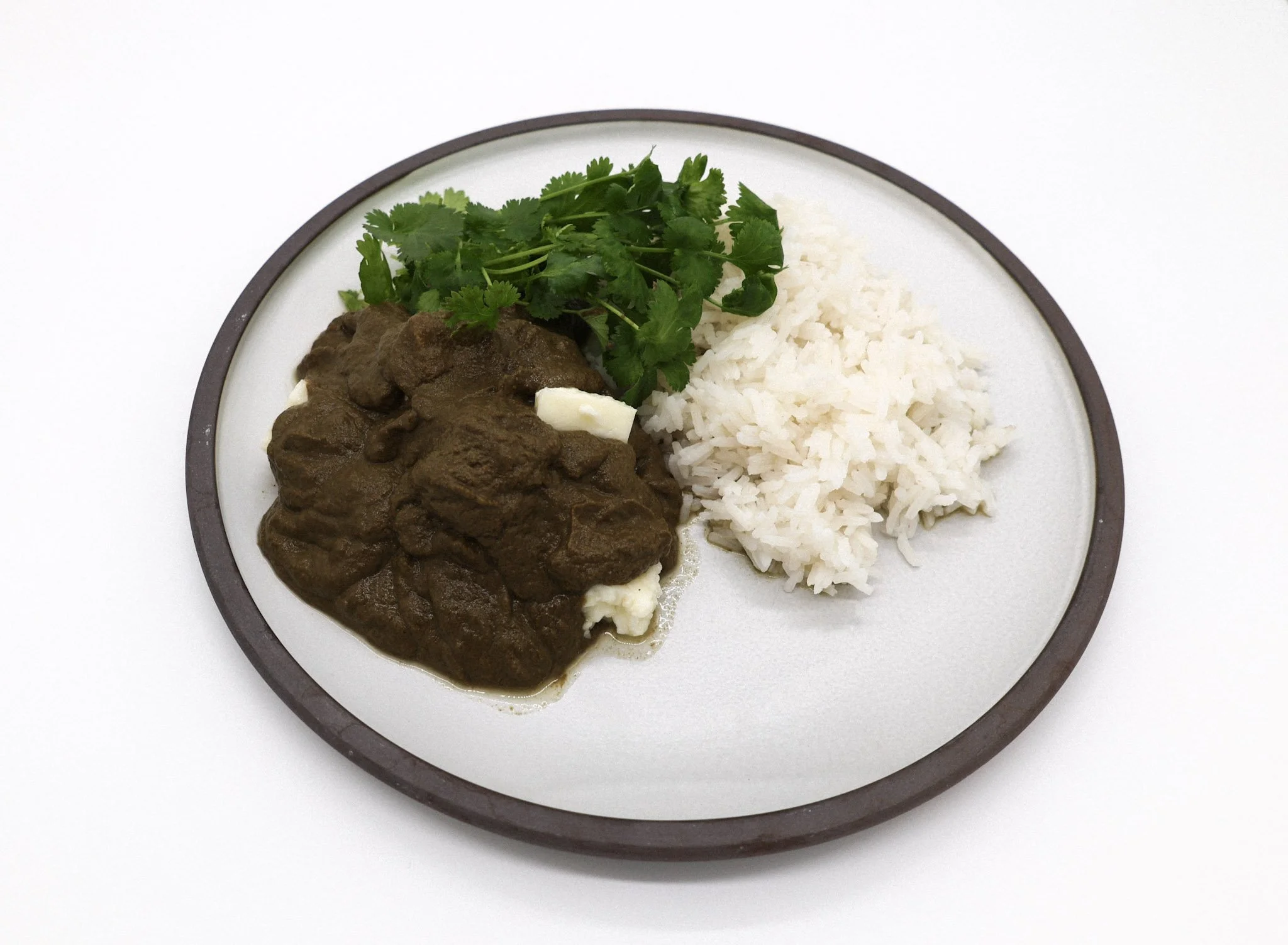
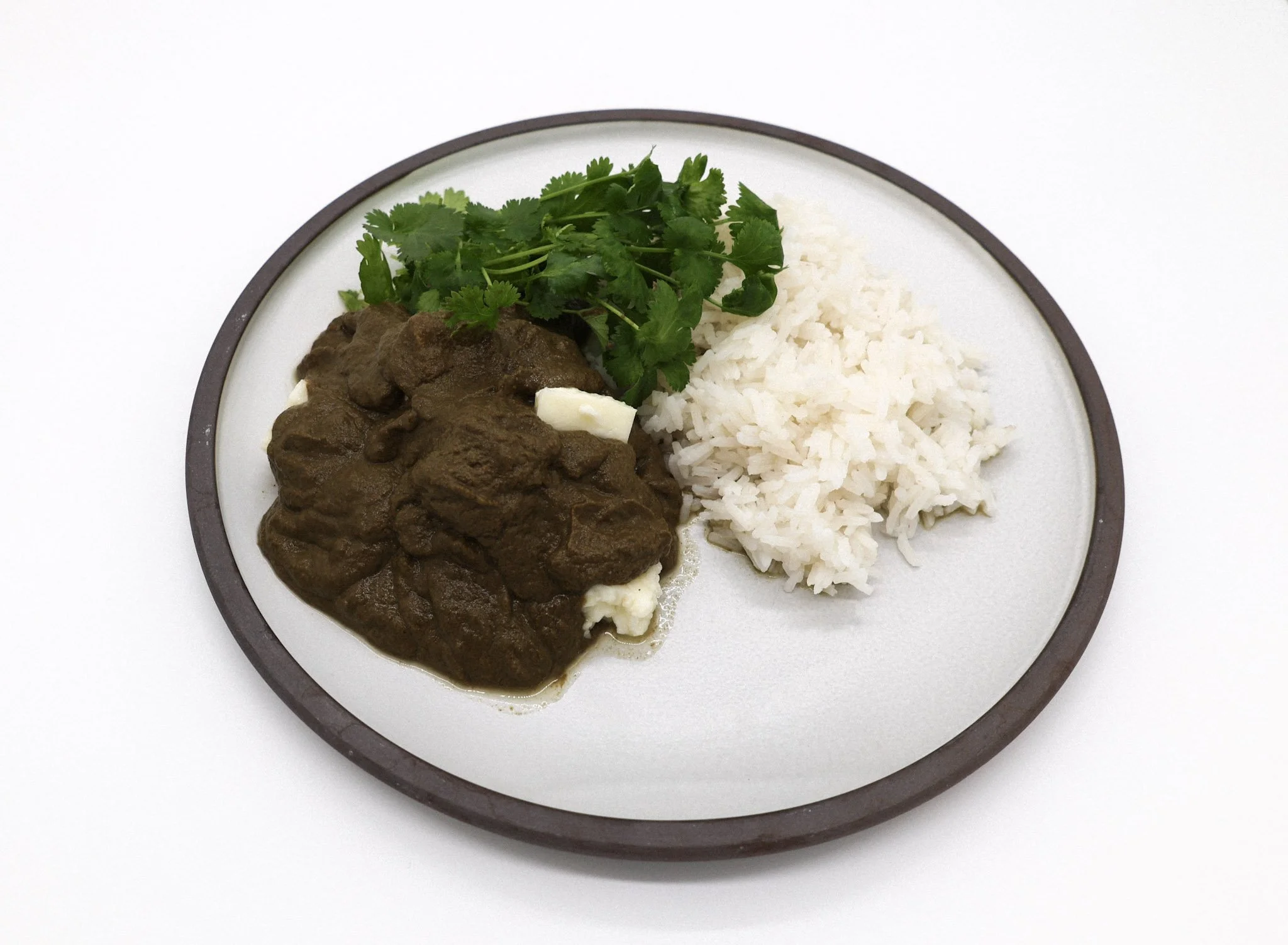
Saag is a versatile dish typical of Northern Indian cuisine, and also a beloved staple of Indian takeaways the world over. The name saag refers to the leafy greens used in the rich, spiced sauce, which can include spinach, fresh fenugreek leaves, mustard greens, purslane, radish leaves and/or other seasonal greens.¹ Paneer (a firm, non-melting cheese), potatoes or meats are often mixed into the sauce, which is typically served with roti, naan or rice.
This take on saag uses our fermented spent green tea leaves and simple ingredients widely available in our home base of Denmark to make a bright and fresh, yet rich and comforting dish, inspired by the varied versions of saag. The protein-rich fermented tea leaves provide zesty, citrus notes as well as a surprising umami body. We also love the connection of a new application for spent tea leaves in a dish rooted in one of the world’s largest tea-producing and tea-drinking cultures.
ii. Recipe
Ingredients
half a head of cabbage, any kind; we used pointy cabbage (spidskål)
3 shallots
4 cloves garlic, minced
25g ground garam masala
25g coriander seeds
15g cumin powder or seeds
100ml neutral oil
200ml white wine
500ml water
40g sugar
40g salt
lemon juice, to taste²
Method
Roughly chop the cabbage and shallots. Sauté them with garlic, garam masala, cumin and coriander seeds in a little oil.
Reduce the wine by half in a separate small saucepan.
Briefly rinse the fermented spent green tea leaves. Add them to the sautéed mixture along with the reduced wine, then add just enough water to cover. Bring to a boil.
Transfer the hot mixture into a high-speed blender and carefully blend while still hot until very smooth.
Mix in the oil and season with sugar and salt, and lemon juice to taste.
Optionally, add paneer or your choice of meat to the sauce.
Serve with roti, naan and/or rice.
iii. Adaptations
This isn’t an authentic saag, not least because of the addition of wine, but rather a Danish take on it using ingredients widely available in Denmark. If you prefer, you could instead adapt your favourite saag recipe by substituting a portion of the leafy greens that you would typically use with fermented spent green tea leaves. Make sure to blend the mixture at high speed to achieve a smooth texture, as the spent tea leaves are otherwise texturally unpleasant, before serving it with your preferred toppings and sides. We’d also be curious to see this saag served with plant cheese or alternative proteins!
Contributions & acknowledgements
Thanks to Torben for dreaming up and designing this delicious recipe and for allowing us to share his creation here, and to Martin Marko Hansen for supporting the workshop collaboration in 2024. Eliot wrote the article in discussion with Kim, with contributions and editorial feedback from Josh. Eliot, Kim and Niklas photographed the final product in our food lab.
Related posts


Endnotes
[1] Julie Sahni (1980), Classic Indian Cooking, William Morrow & Company: New York City, USA.
[2] Depending on how long you have fermented your spent green tea leaves for, you may want to add less lemon—more fermented leaves tend to be more acidic.