
This is part of our series on upcycling fruit & veg by-products.
Table of Contents
i. Introduction
Artichokes are a peculiar vegetable. The much-coveted heart only makes up about 10–15% of the vegetable’s mass, while the rest is often discarded as tough, prickly, or unmanageable.¹ If not for centuries of culinary tradition and knowledge, they might seem too well-armoured to bother with.
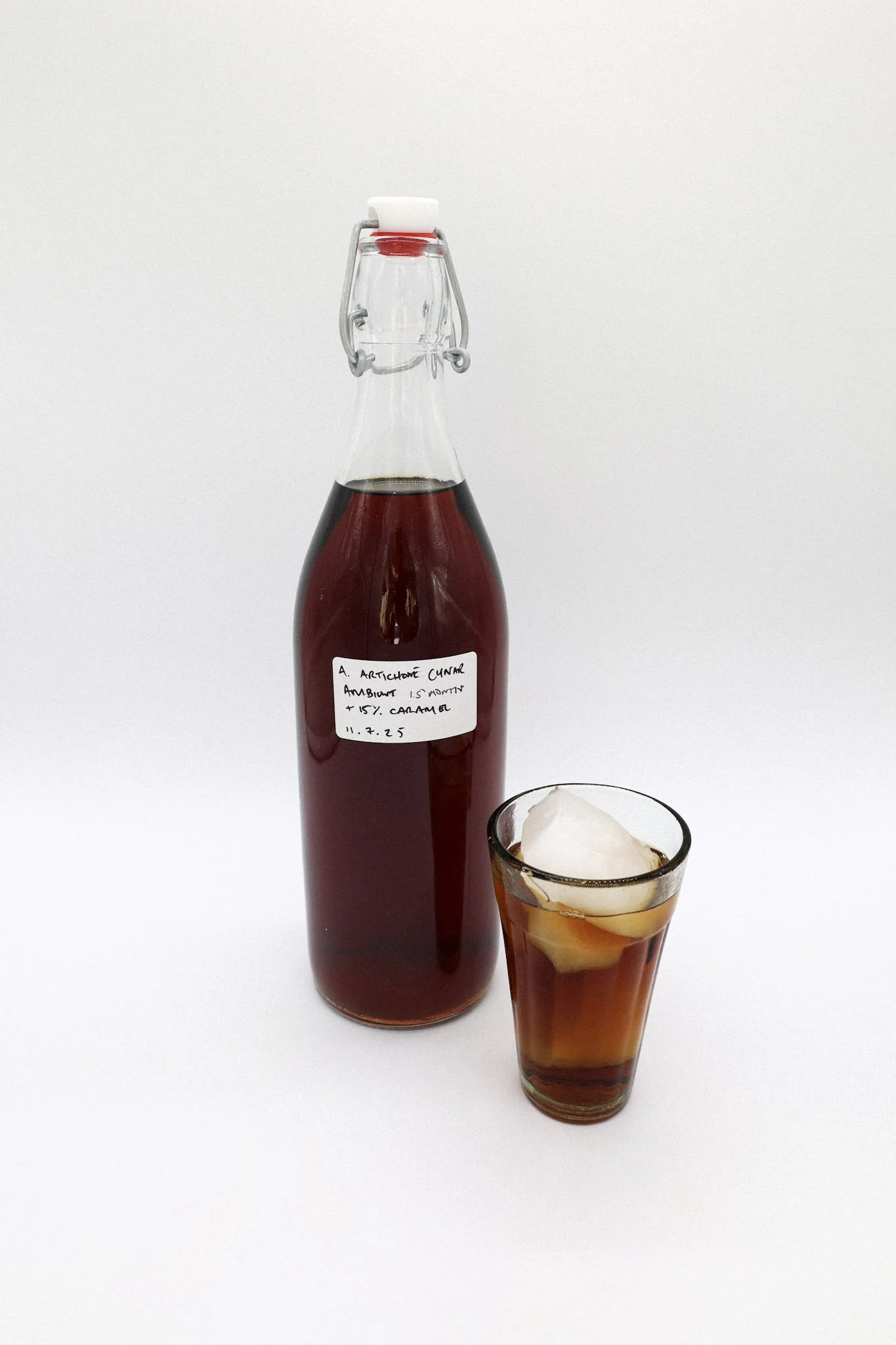
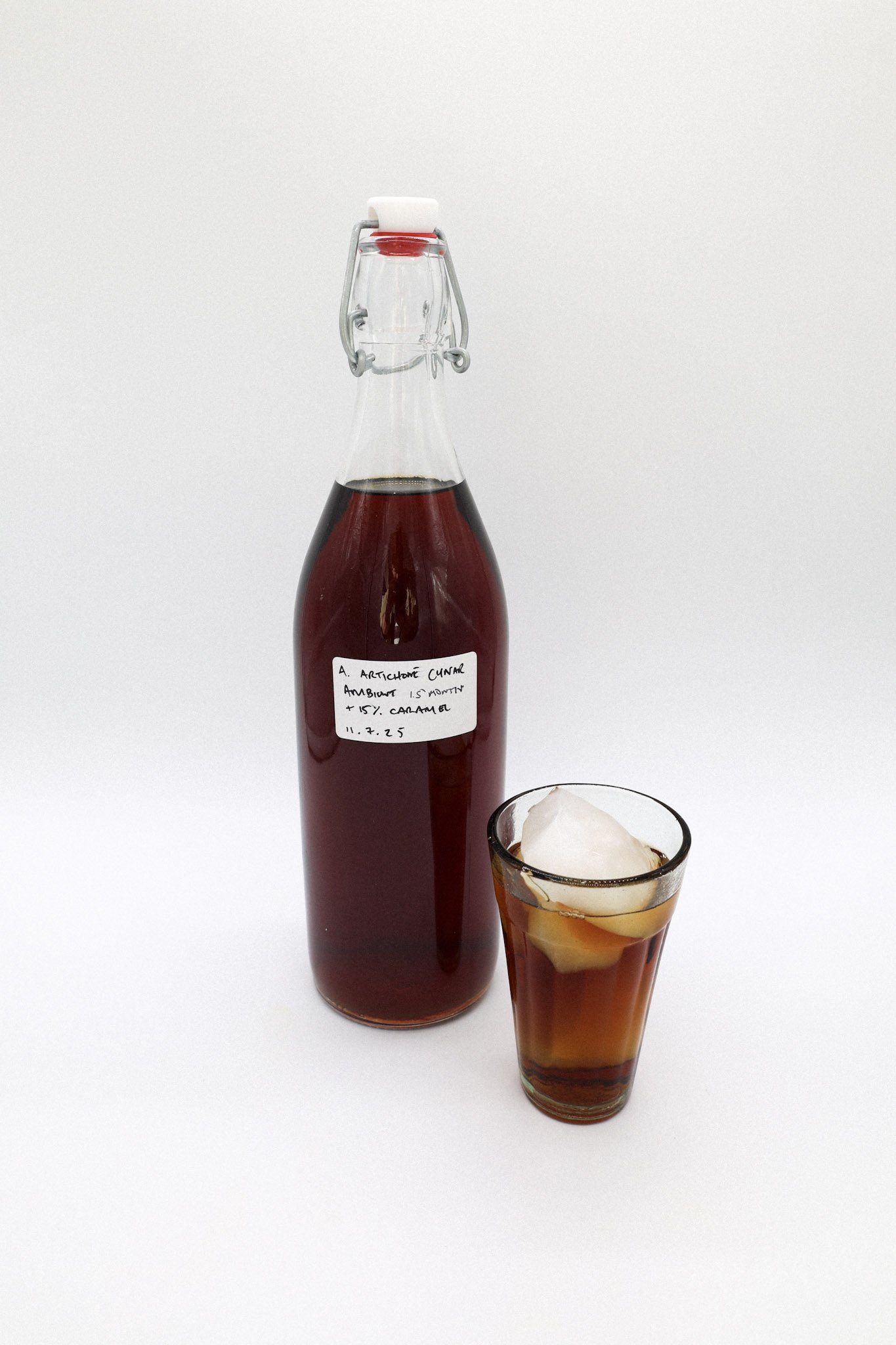
One traditional Italian way of using up some of those trimmings is cynar, a slightly bitter, herbal and aromatic amaro or digestif, which is made using the discarded leaves and flavoured with a blend of 12 herbs and spices. Our version uses all the artichoke trimmings, even the furry choke, rather than just the leaves. We wanted to share it here because artichokes are so famously waste-prone and turning those trimmings into a cynar is a way of honouring the whole plant.
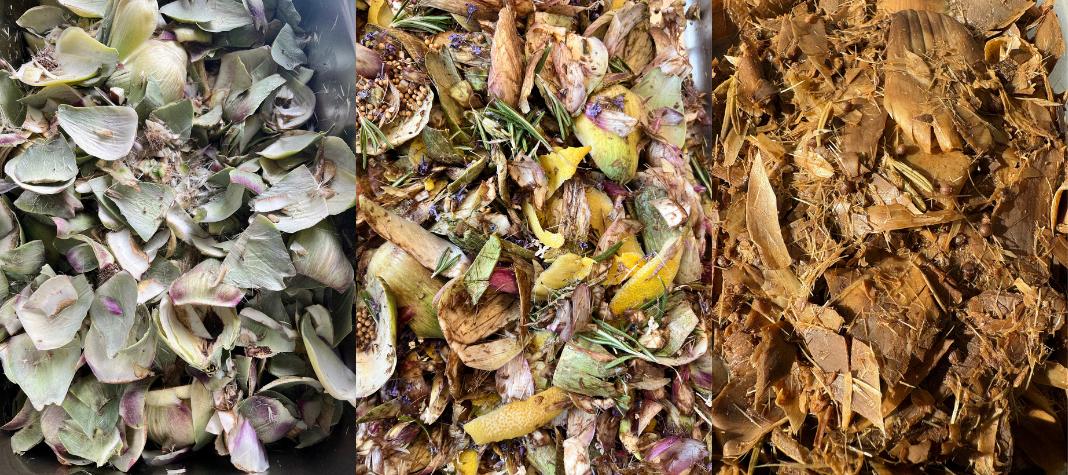
From left to right: artichoke trimmings; artichoke trimmings mixed with the aromatic ingredients;
strained solids after maceration.
ii. Recipe
Ingredients
1500g artichoke trimmings
200g lemon zest
30g fresh rosemary
30g coriander seed, dried
30g lilac flowers, dried
2700g neutral spirit (40% abv)
280g sugar
70g dextrose²
175g water
Method
Pulse the artichoke trimmings in a Robot Coupe to roughly chop and bruise them. This helps release the bitter plant compounds and rich brown colour that are characteristic of cynar.
Sterilise a large jar or vessel with a sealable lid using alcohol or boiling water, and if the latter allowing to cool.
Mix the artichoke trimmings with the other aromatic ingredients in a large bowl, then pack them tightly into the sterilised jar or vessel.
Pour over neutral spirit until the plant material is fully covered, then seal with the lid.
Macerate for 3 months at ambient temperature.
Strain through a super bag, pressing to extract as much of the liquid as possible—we used an apple press to do so—and then filter again through a coffee filter.
Weigh the strained liquid and reserve.
To make a caramel, combine sugar, dextrose and 75g of water in a heavy-bottomed saucepan.
Heat gently to dissolve, then increase to medium-high.
Once boiling, swirl the pan gently if needed. Do not stir as it can cause sugar crystals to form, resulting in a gritty texture.
Cook to 190-192°C, monitoring with a sugar thermometer.
Remove from the heat once the desired colour is reached.
Carefully add the remaining 100g of water in small amounts to arrest cooking and loosen the caramel. It will bubble vigorously; stir to dissolve and cool.
Add the caramel to the cynar base to 15% of the total liquid weight. Mix to dissolve. Store in a sterilised bottle with an airtight seal.
iii. Adaptations
The aromatic components could be adapted to suit your taste and/or ingredient availability, depending on the final flavour profile you want to achieve; for example, lilac flowers could be exchanged for other aromatic dried edible flowers.
An accelerated process can be achieved by the mixture at 60°C for 7 days. Note that acceleration may result in reduced complexity and a less robust flavour.
Contributions & acknowledgements
Kim performed the original culinary R&D starting in 2018, developing it further with us. Nurdin tested the recipe and documented the process with notes and photography. Eliot wrote the article using these notes and following further discussion with Nurdin and Kim, with contributions and editorial feedback from Josh. Nurdin and Eliot photographed the final product in our food lab.
This recipe has roots in Kim’s previous work as Head of R&D at the former Amass Restaurant in Copenhagen. Thank you Amass for facilitating such trailblazing work in culinary upcycling and holistic sustainability!
Related posts

Endnotes
[1] Daniel Gritzer, ‘How to Clean, Trim, and Prepare Artichokes’, Serious Eats. Artichokes aren’t quite as wasteful as they seem. Along with the heart, the tender inner stems, young leaves, and even some of the outer leaves (or bracts) are perfectly edible. One traditional preparation involves boiling or steaming the whole artichoke, peeling individual outer leaves and dipping them into a vinaigrette or garlic butter then scraping the tender flesh with your teeth from each leaf. See Elise Bauer, ‘How to cook and eat an artichoke’, Simply Recipes.
[2] The dextrose prevents the sugar from crystallising when heated and allows the caramel to reach a higher temperature.