
Black carrot presscake
This is part of our series on upcycling fruit & veg by-products.
Table of Contents

i. Introduction
The Maillard reaction occurs between amino acids and reducing sugars and is responsible for the meaty, savoury and nutty flavours of beloved foods like browned meats, crusty bread, and roasted coffee. Usually associated with cooking at higher temperatures, it can also happen much more slowly and at much lower temperatures through a technique called blackening (of Korean origins, not to be confused with the Cajun technique of the same name), producing a complex variety of flavour and aroma molecules.¹ The most famous example of this technique is black garlic, where pungent heads of fresh garlic are slowly transformed into dark, jammy jewels of umami-rich sweetness with complex aromas of black olive, treacle, and Chinkiang vinegar (and notably, not garlic).
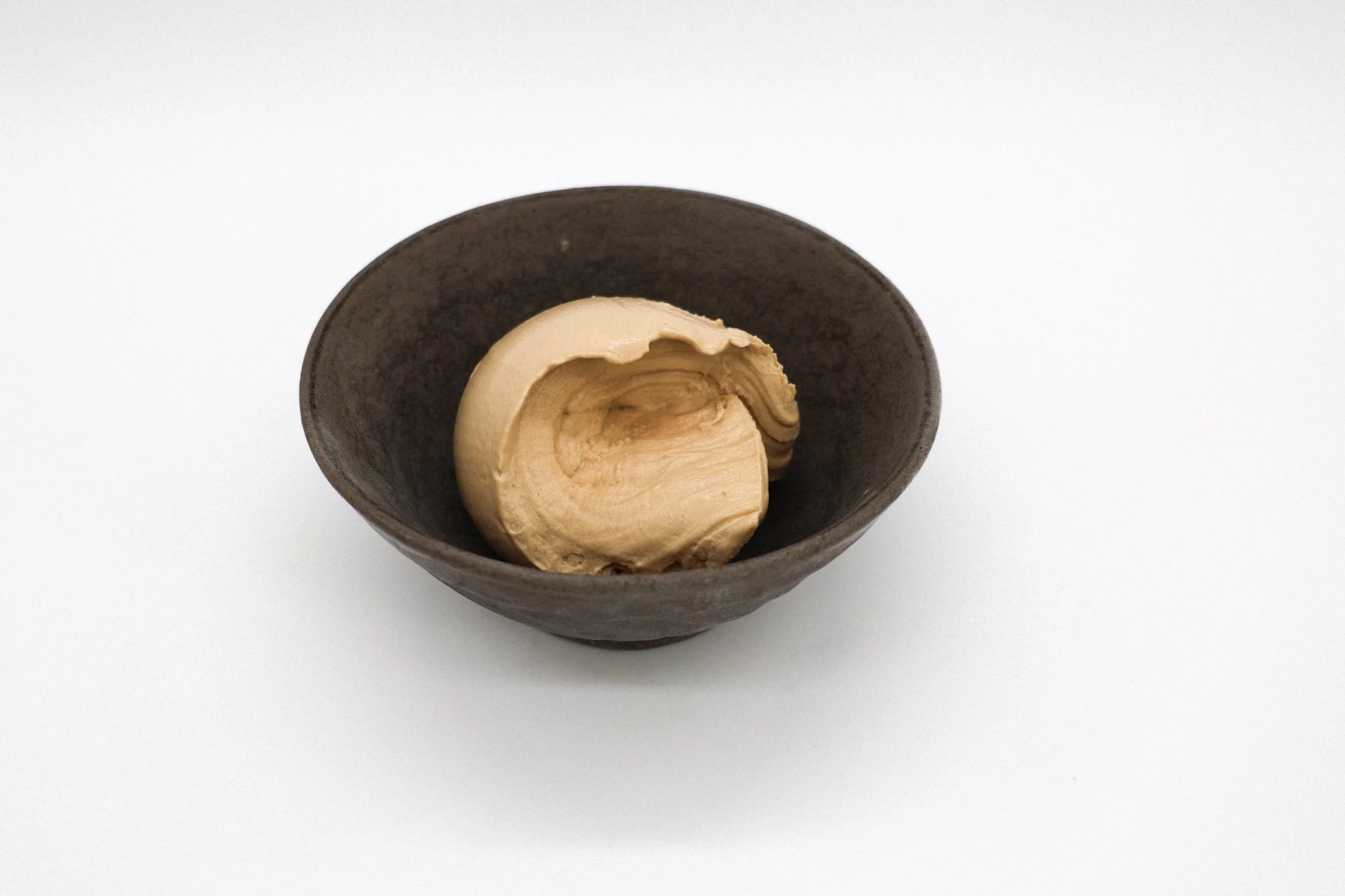
The technique has since been applied to many other ingredients to unlock all kinds of flavours.² Here we use it to transform carrot juice presscake.³ When he first tasted the resulting raisin-like paste, Eliot was immediately transported back to eating his Grandma’s Christmas cake and mince pies during his childhood. An Anton Ego moment from something that would otherwise be thrown away.
This base recipe can then be used as an ingredient elsewhere, such as a membrillo-like fruit paste to accompany a cheese board or in a dessert like an ice cream.
ii. Recipe
Ingredients
500g carrot juice presscake
270g water (see adaptations for more)
96g sugar
Method
Mix all the ingredients in a sterilised bowl.
Neatly fill a sous vide bag with the mixture and vacuum seal it, ensuring a clean seal with all air removed. If you don’t have access to a vacuum sealer, this step can also be performed using a container with an airtight seal, such as a tight-fitting jam or Kilner jar.
Incubate at 60°C for three months.
Once blackened, the black carrot presscake can be stored in the fridge for up to 3 months or frozen for longer storage.
iii. Adaptations
You can substitute water with other liquids instead. Coffee works particularly well as it provides a complexity and structure that contrasts with and balances the sweetness of the carrot. Tea, beer or wine can also produce good results. The ideal choice will depend on how you plan to use your black carrot presscake.
You could also try this technique with other juice presscakes. There is so much potential flavour to be derived from blackening different juice presscakes, as with other techniques like our fermented juice presscake hot sauces.
The yield of juice presscake and its moisture content will vary depending on the choice of juicing machine—a cold press juicer yields more juice and a drier presscake, for example, than a centrifugal juicer. The variety, maturation and storage of the carrot will also impact the yield. We used the Tribest Green Star Elite GSE-5300-220V Deluxe Jumbo Twin Gear Juice Extractor juicer, which yielded 47% and 57% carrot juice presscake by mass during two different rounds of R&D. It may be necessary to rebalance the water in your recipe if your presscake is particularly wet due to poor extraction.
Contributions & acknowledgements
Kim performed the original culinary R&D starting in 2014, developing it further with us. Nurdin tested the recipe and documented the process with notes and photographs. Eliot wrote the article in discussion with Kim, with contributions and editorial feedback from Josh. Nurdin and Eliot photographed the final product in our food lab.
This recipe has roots in Kim’s previous work as Head of R&D at the former Amass Restaurant in Copenhagen. Thank you Amass for facilitating such trailblazing work in culinary upcycling and holistic sustainability!
Related posts

Endnotes
[1] Caramelisation of sugars also plays its part in flavour development during blackening. See The Noma Guide to Fermentation for a nice introduction to the science of blackening.
[2] See The Noma Guide to Fermentation for some other examples of black products.
[3] The name ‘black carrot presscake’ refers here to the blackening process used to transform carrot juice presscake, rather than to the several varieties of carrot with naturally dark or black flesh and skin. Of course, one could also blacken black carrot presscake!