
This is part of our series on upcycling fruit & veg by-products.
Table of Contents
i. Introduction
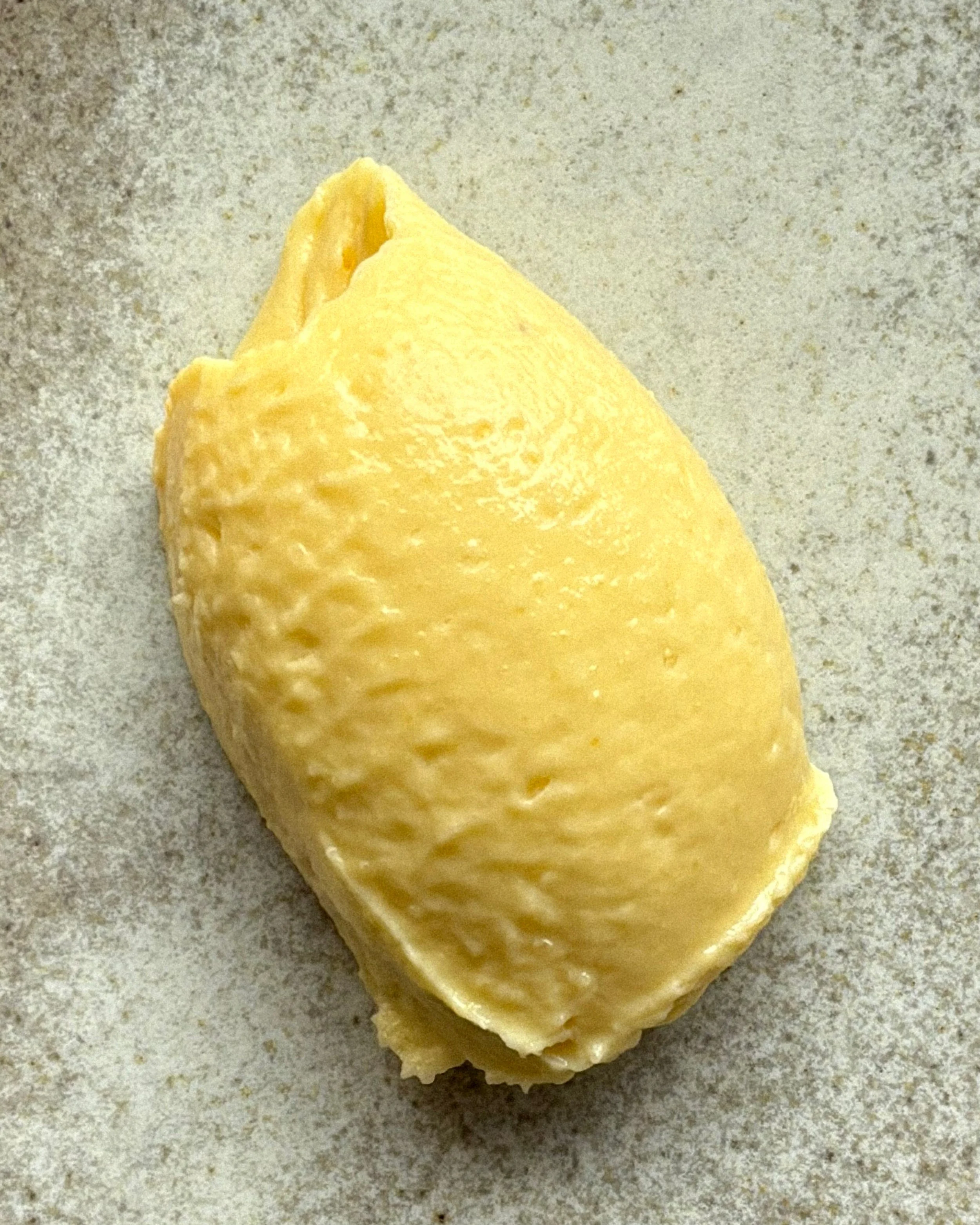
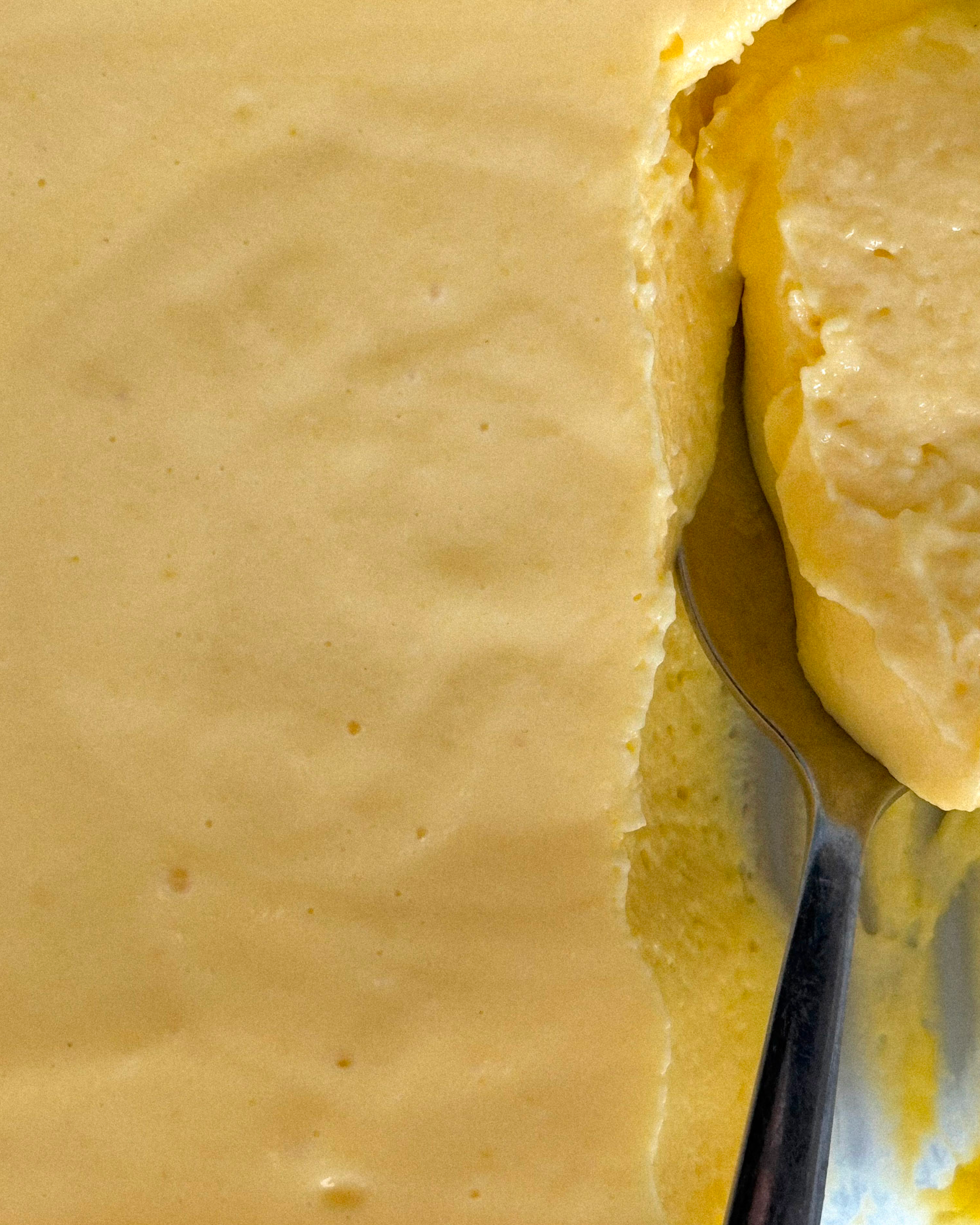
This bright and complex lemon curd is made using our kōji'd lemon skin base recipe, where we grow Aspergillus luchuensis on juiced lemon skins to re-acidify them.
ii. Recipe
Ingredients
120g kōji’d lemon skin¹
60g water
200g sugar
1g sea salt
240g egg yolks
150g cold butter, cut into 1cm cubes
Method
Blend all the ingredients except the butter in a high-speed blender on full power for 30 seconds, until completely smooth.
Transfer the mixture to a stainless steel bowl set over a double boiler. Stir constantly, ensuring that you scrape across the entire surface, and heat gently until the mixture reaches an internal temperature of 70°C to cook the egg yolks for a minimum of 15 seconds and to initiate the thickening process.
Whisk in the cold butter, piece by piece, until fully emulsified. Remove from the heat once combined.
Allow the mixture to cool and thicken. Reserve in the fridge.
iii. Adaptations
The recipe can also be prepared in a ThermoMix, using the integrated heating system to cook the egg yolks and thicken the curd. If doing so, for consistency, use a separate temperature probe to double-check that the mixture reaches 70°C.
The variety of lemon that you use will determine how bitter the curd is. Although we haven’t tried it, this recipe could be adapted to use the skins of other citrus fruits, either those that have been prepared using the same re-acidification process with A. luchuensis or another Aspergillus strain, or those that have not been re-acidified at all. Each would result in different flavour profiles.
Contributions & acknowledgements
Kim performed the original culinary R&D starting in 2019, developing it further with us. Nurdin refined the recipe and documented the process with notes and photography. Eliot wrote the article using these notes and following further discussion with Nurdin and Kim, with contributions and editorial feedback from Josh. Nurdin and Taylor photographed the final product in our food lab.
This recipe has roots in Kim’s previous work as Head of R&D at the former Amass Restaurant in Copenhagen. Thank you Amass for facilitating such trailblazing work in culinary upcycling and holistic sustainability!
Related posts

Endnotes
[1] Make sure to use a white spore strain of A. luchuensis, otherwise your curd will be grey (it will still taste the same).